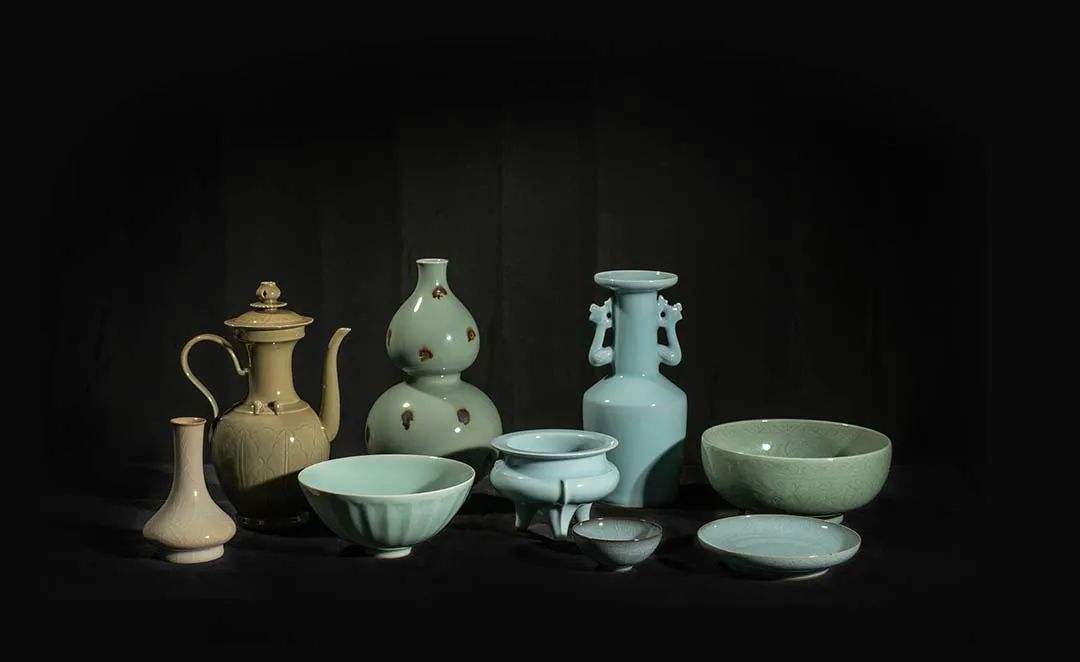
Longquan Celadon
Introduction
Longquan Celadon, originating from the city of Longquan in Zhejiang province, is a renowned type of green-glazed Chinese ceramic that dates back over 1,600 years. As a staple of Chinese ceramic art, Longquan Celadon is celebrated for its distinct jade-like glaze and intricate craftsmanship. This art form reached its peak during the Song Dynasty (960-1279) and has played a significant role in China's cultural heritage.
The traditional firing technology of Longquan celadon was inscribed on the UNESCO Representative List of the Intangible Cultural Heritage of Humanity in 2009.
Making Techniques
The production process of Longquan Celadon is intricate and involves multiple stages. The celadon glaze is prepared from a mixture of burnt feldspar, limestone, quartz and plant ash, applied to a stoneware vessel, and then fired in a kiln. This process requires precise control of temperature, often reaching up to 1310°C, to achieve the desired glaze effect. The final product may take the form of 'elder brother' celadon, with a black finish and crackle effect, or 'younger brother' celadon, characterized by a thick, lavender-grey, and plum-green finish.
Historical Significance
The history of Longquan Celadon can be traced back to the Three Kingdoms period (220-280), with the art form reaching its zenith in the Song Dynasty. It was primarily produced in the Longquan kilns, one of the most famous kiln sites in Chinese ceramic history. During the Song and early Ming (1368-1644) dynasties, Longquan Celadon was highly valued as tributes for the imperial family before becoming a major export product through the Maritime Silk Road from the 12th to the 15th centuries.
The flourishing trade of Longquan Celadon during its peak significantly contributed to China's economy and helped establish trade networks across Asia, Africa and Europe. The art form was not only a key export item but also influenced the development of similar ceramic styles worldwide. Techniques from Longquan spread to regions like Japan, Vietnam, Iran, Turkey, Egypt and Britain, where local potters attempted to replicate the exquisite green glaze.
Modern Day Preservation and Innovation
Today, Longquan continues to celebrate its rich celadon heritage. The city hosts numerous exhibitions showcasing both ancient and contemporary works, and local artisans are committed to preserving traditional techniques while experimenting with modern designs. This ongoing dedication ensures the continued relevance and appreciation of Longquan Celadon in both domestic and international markets.








